Turkic and Mongolic Cultural Assimilation
Posted on
The Turkic and Mongolic peoples, known more for their horseback warfare and tribal councils than for courtly rituals, ended up ruling vast and ancient civilizations like China, India, Persia, and parts of Eastern Europe. But instead of imposing their own nomadic ways on these lands, they often ended up adopting the local cultures—especially when it came to how they ruled. From clothing and architecture to government structures and court ceremonies, these conquerors didn’t just take over—they blended in and reinvented themselves. Let’s start with Kublai Khan in China.
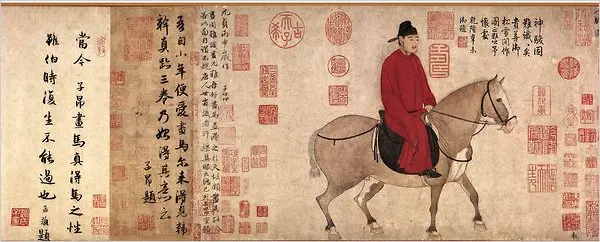
When Kublai Khan took over China and started the Yuan Dynasty in the late 1200s, he wasn’t just inheriting land—he was stepping into the shoes of an ancient civilization with a super deep and sophisticated culture. Coming from a nomadic Mongol background, Kublai wasn’t used to things like huge palaces, civil bureaucracies, or complex court rituals. Mongol leadership was usually based on personal loyalty and military skill, not formal titles and Confucian philosophy. But Kublai realized pretty quickly that if he wanted to rule China properly—and be taken seriously by the Chinese people—he had to adapt. So he declared himself Emperor (using the Chinese title “Huangdi”), moved the capital to what’s now Beijing, and started building palaces in Chinese style. He brought Confucian scholars into his government and began blending Mongol customs with Chinese traditions. It wasn’t a total transformation—he still gave special privileges to Mongols and kept some steppe-style systems—but his court became this interesting mix of Mongol roots and Chinese elegance. In the end, Kublai managed to turn himself from a steppe warlord into a legitimate Chinese emperor, at least in the eyes of the people he ruled.
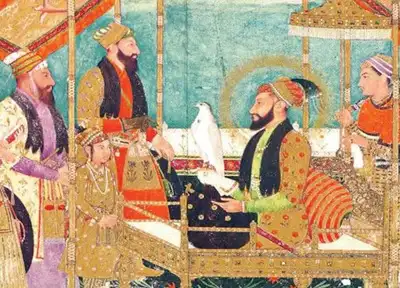
The Mughals are one of the best examples of steppe warriors turning into full-on emperors with style. They were descended from both the Mongols (through Genghis Khan) and the Timurids, so they had that Central Asian, nomadic-warrior blood. But when Babur invaded India in the early 1500s, he found a land that was already super rich in culture, art, and politics. Over the next few generations, the Mughals didn’t just conquer India—they became Indian in their own way. They adopted Persian as the court language, blended Islamic and Indian traditions, and built some of the most iconic architecture in the world (yep, including the Taj Mahal). Their clothes, art, and even military gear started reflecting local styles. They formed alliances with powerful Hindu rulers like the Rajputs, and you can even see Rajput influence in their armor and royal ceremonies. By the time of Akbar and Shah Jahan, the Mughal Empire was this unique blend of Persian, Central Asian, and Indian culture—and honestly, that’s what made it so iconic. They didn’t just rule India—they became a part of it.
You might wonder how the Persian influence came on Mughals since they were neither Persians, nor had anything to do with them, well its because of Amir Timur. The Timurids were already mixing steppe and settled cultures. Timur, who ruled from Samarkand in the late 1300s, was a Turco-Mongol warlord who loved conquest just as much as he loved art and architecture. His empire became a cultural melting pot, blending Persian language and culture with Turkic traditions and Mongol military structure. The Timurids built stunning cities, supported poets and scientists, and helped spread Persian influence across Central Asia. This Timurid legacy played a huge role in shaping the Mughal identity. When Babur came to India, he brought that Central Asian flair with him—Persian poetry, Timurid architecture, and a love for gardens, symmetry, and style. So while the Mughals definitely became “Indian” over time, they were also carrying forward this deep tradition of blending nomadic roots with sophisticated culture. They didn’t just copy what they found—they layered it on top of what they already had.
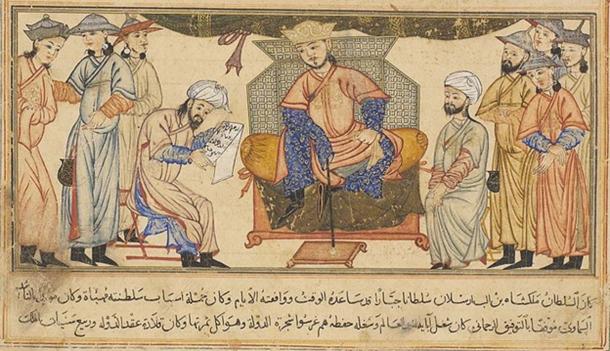
Another example are the Seljuks. The Seljuks were Turkic nomads who burst onto the scene in the 11th century, carving out a huge empire across the Middle East and Central Asia. But even though they were fierce warriors from the steppe, they didn’t stay “nomadic” for long. As soon as they settled in Persian lands, they pretty much adopted the whole Persian style of ruling. They kept the Islamic faith, but it was Persian culture that really shaped their empire—especially when it came to things like administration, architecture, and court life. They started using Persian titles like “Sultan,” had viziers running their bureaucracy, and built schools (madrasas), mosques, and palaces in classic Persian style. The Seljuks might’ve ridden in as steppe warriors, but they quickly became Persianized kings with all the elegance and ceremony that came with it. And this whole Persian-Turkic fusion would go on to inspire a bunch of future empires—including the Ottomans.
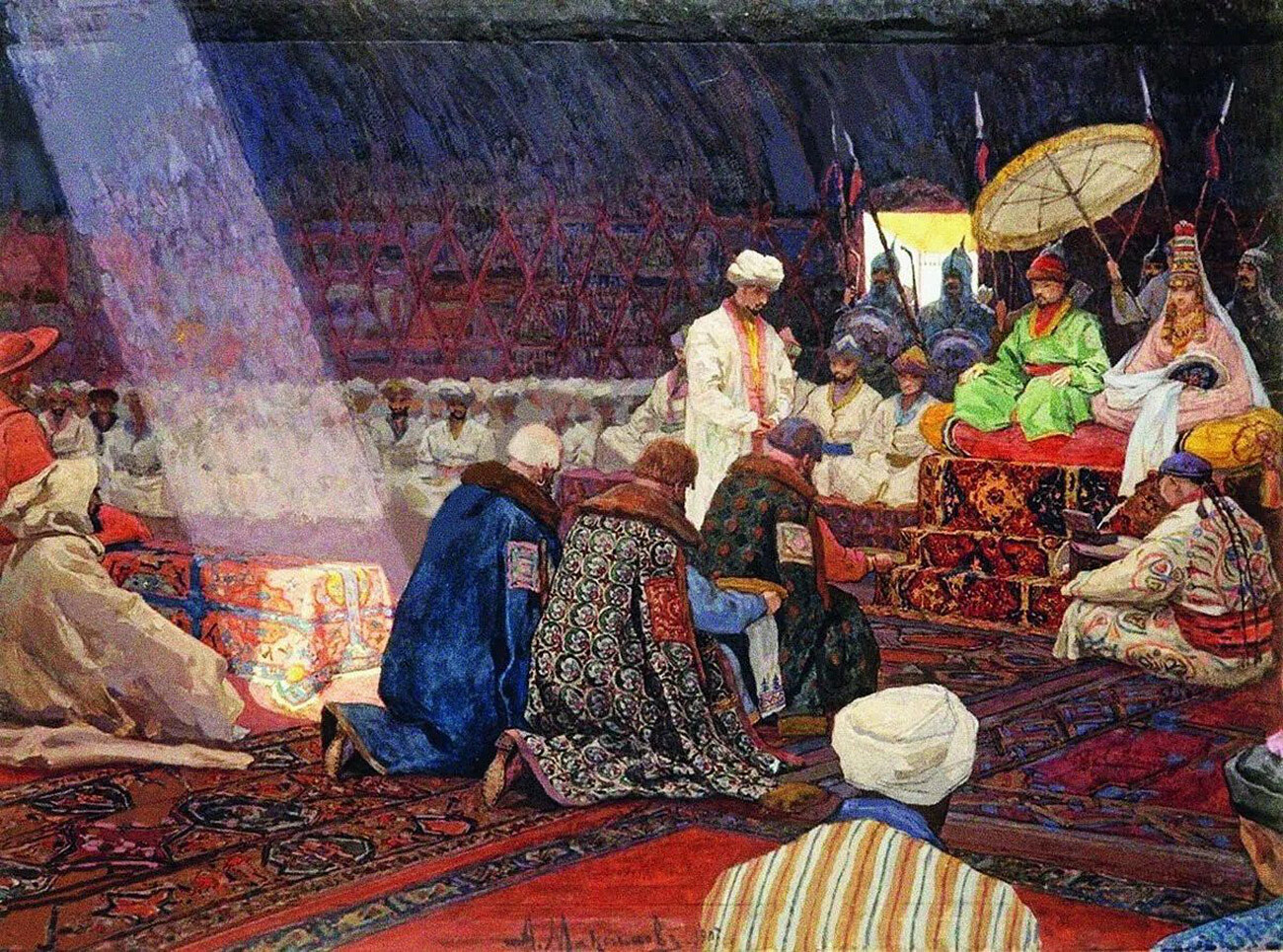
But this cultural assimilation was not just exclusive to Asia. When the Mongols expanded westward in the 13th century, one of the branches of the empire—known as the Golden Horde—took control of a huge chunk of Eastern Europe and the Russian steppes. Unlike in China or Persia, they didn’t fully settle down in big cities or build massive palaces, but they did adapt in their own way. At first, they ruled from the outside—demanding tribute from Russian princes while keeping their nomadic lifestyle. But over time, things started to shift. The Horde gradually converted to Islam, and their court, especially under rulers like Öz Beg Khan, began to take on Islamic and Turkic characteristics. At the same time, they also absorbed elements of Slavic political systems—like using local princes to collect taxes for them and allowing Orthodox Christianity to continue unbothered. The Russian administrative setup actually grew under Mongol influence, weird as that sounds. So while the Golden Horde stayed more “steppe” than some of the other Mongol branches, they still ended up blending Mongol, Turkic, Islamic, and Russian traditions into something totally unique. So while Eastern Europe didn’t see the same level of full cultural fusion like in India or Persia, there was still plenty of adaptation going on especially where it helped these nomadic rulers manage diverse populations or stay relevant in shifting political landscapes.
Funny how the guys who set out to take over the world ended up borrowing everyone’s clothes, customs, and castles. They crossed continents to impose their will, only to be shaped by the civilizations they tried to bend. Unlike in the East, where steppe conquerors were absorbed into the rich fabrics of ancient civilizations, Europe remained distant—familiar yet somehow impenetrable. The empires that once reshaped Asia left only shadows on its western edge, never quite becoming part of the story in the same way. Maybe it was the land, the rhythm of its kingdoms, or something harder to name. But it does make you wonder—what kept the steppe from settling in Europe the way it did elsewhere?